Shaun
Shaun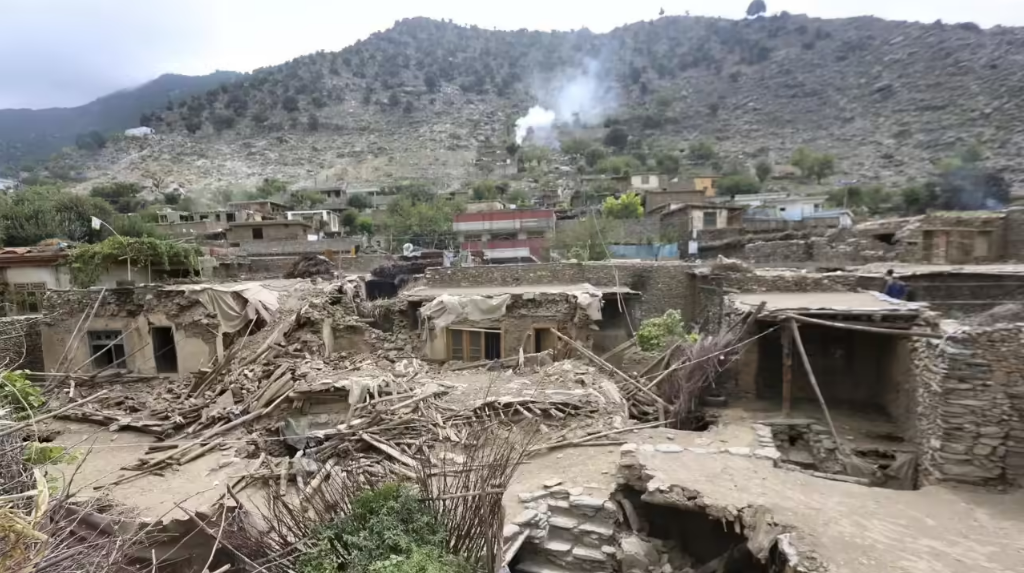
A 6.3-magnitude earthquake struck near the northern Afghan city of Mazar-e-Sharif early Monday, killing at least 10 people and injuring around 260, officials said. The tremor comes just months after a powerful quake and a series of aftershocks in August left more than 2,200 people dead.
Here’s a look at why Afghanistan experiences frequent earthquakes and what can be done to reduce their impact.
Frequent quakes
Hemmed in by rugged mountain ranges, Afghanistan is among the world’s most disaster-prone countries. Earthquakes cause the highest number of fatalities, an average of 560 deaths annually, and result in damages worth about $80 million each year.
At least 355 earthquakes measuring above magnitude 5.0 have struck Afghanistan since 1990, making tremors a regular threat across much of the country.
Collision of tectonic plates
Afghanistan’s seismic activity stems from its location at the intersection of several major tectonic plates. The country lies on the edge of the Eurasian plate, which collides with the Indian plate moving northwards, while also being influenced by the Arabian plate to the south.
This convergence creates one of the most tectonically active zones on Earth, generating frequent earthquakes as the plates push, twist, and grind against one another.
High-risk regions
Eastern and northeastern Afghanistan, particularly along the borders with Pakistan, Tajikistan, and Uzbekistan, are most vulnerable to strong tremors. Kabul, the densely populated capital, faces the highest estimated financial damage from earthquakes, averaging about $17 million each year.
Mountainous regions face an added threat: quakes often trigger landslides that bury villages and block critical access routes, worsening rescue challenges.
Major earthquakes in recent decades
Afghanistan has recorded about 100 damaging earthquakes since 1900.
- In 2022, a 6.0-magnitude quake killed around 1,000 people.
- Multiple tremors in 2023 destroyed entire villages and left another 1,000 dead.
- A powerful 7.5-magnitude quake in 2015 killed 399 people across Afghanistan, Pakistan and India.
- In 1998, two major earthquakes within three months killed a combined total of about 7,000 people.
Experts say strengthening infrastructure and improving monitoring systems are crucial for reducing the human toll. Studies recommend that new buildings be constructed using earthquake-resistant techniques and that older structures be retrofitted to prevent collapse.