Shaun
Shaun
The joint NASA and ISRO mission NISAR (NASA ISRO Synthetic Aperture Radar) is a step closer to launch. In a statement, NASA announced on June 13 that the Earth-observation satellite arrived at the launch site after necessary repair works were complete.
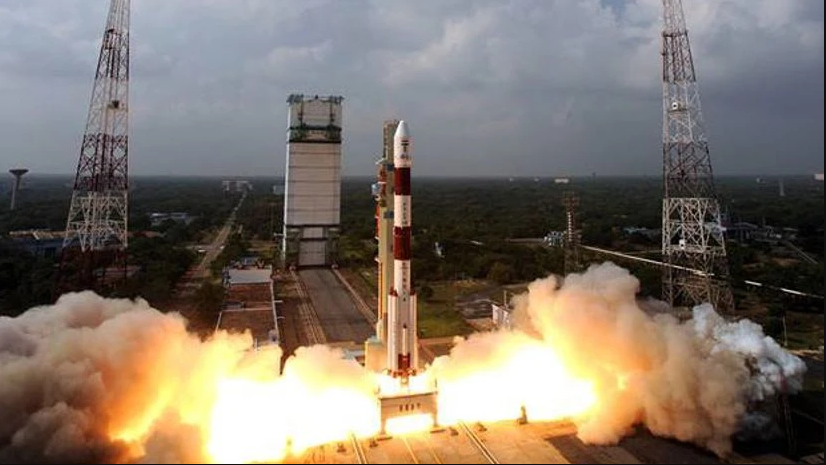
The satellite arrived safe and sound on May 15 at Satish Dhawan Space Centre in Sriharikota, Andhra Pradesh, where it will be integrated with the Geosynchronous Launch Vehicle Mark II rocket for launch in July.
The satellite first underwent inspections at ISRO’s Satellite Integration and Test Establishment in Bengaluru, Karnataka, before setting out on a 360-km-long journey to the launch site.
NISAR has suffered a long delay in launch due to issues with a key component. The the radar antenna reflector built by NASA’s Jet Propulsion Laboratory (JPL) was shipped back to the US after engineers identified a flaw. This instrument is necessary for the mission as it is designed to transmit and receive microwave signals to and from Earth’s surface, enabling the satellite to scan nearly all the planet’s land and ice surfaces.
What is the NISAR mission about?
According to NASA, NISAR will collect data about our planet’s environment. It will scan nearly all of Earth’s land and ice surfaces twice every 12 days, providing insights into the expansion and contraction of ice sheets, sea ice, and glaciers, the deformation of its crust due to natural hazards, as well as natural and human changes to Earth’s terrestrial ecosystems.
The satellite has two radar systems – the L-band system built by JPL, and an S-band system constructed by ISRO’s Space Applications Centre.
“Not only is NISAR the first satellite to carry two radars working at two different frequencies, but the mission also marks the first hardware collaboration on an Earth-observing mission between the two space agencies,” NASA said in a statement.


 admin
admin