Shaun
Shaun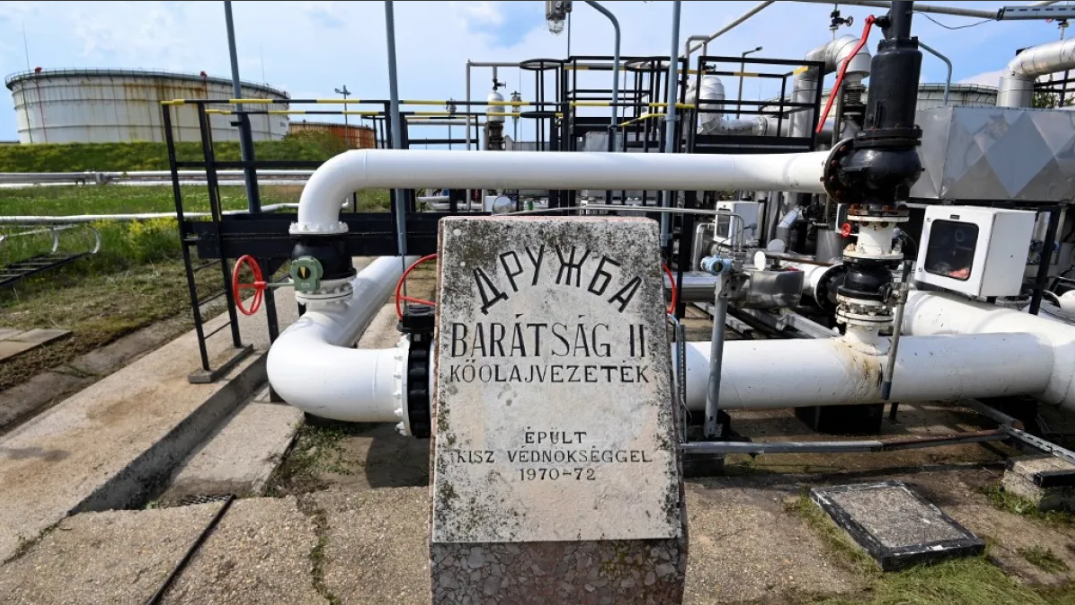
Ukraine has hit a key pumping station on the Druzhba oil pipeline bringing fuel to Europe from Russia, knocking out supplies to Hungary and Slovakia, the only remaining EU member states still receiving Russian oil. As Ukraine targets infrastructure crucial to Moscow’s war effort in response to the Russian onslaught, the commander of Ukraine’s Unmanned Systems Forces, Robert Brovdi, announced the attack on the Unecha pumping station in the Bryansk region.
Bryansk’s premier, Alexander Bogomaz, said in a Telegram post that Ukraine fired Himars rockets and drones at the Region in a combined attack. The Hungarian and Slovakian governments wrote to the European Commission, the EU executive, saying that Russian oil supplies could be suspended for at least five days owing to the damage.
The Ukrainian strike drew an angry reaction from Budapest, which gets more than half its crude oil from the Druzhba pipeline. Szijjártó wrote on Facebook it had been attacked “for the third time in a short time”.
“This is another attack on the energy security of our country. Another attempt to drag us into war,” he said.
Hungary’s prime minister, Viktor Orbán, has refused to join EU partners in backing Kyiv with political, economic and military support. Orbán visited Moscow last year for talks with the country’s president, Vladimir Putin, on a rare trip to Russia by a European leader.
On Friday, Orbán’s Fidesz party posted a note from its leader condemning Ukrainian strikes on the pipeline earlier in the week “just before the historic meeting between President Trump and Putin in Alaska”.
“Hungary supports Ukraine with electricity and petrol, in return they bomb pipeline that supply us,” Orbán wrote in English. “Very unfriendly move! We wish President Trump every success in his pursuit for peace!”
Below the text was a handwritten message apparently written and signed by Trump: “Viktor – I do not like hearing this – I am very angry about it. Tell Slovakia,” it read. “You are my great friend – Donald.”
While the other 25 EU member states halted Russian oil purchases as part of the bloc’s sanctions after Moscow’s full-scale invasion of Ukraine in February 2022, Hungary and Slovakia have remained outliers.
The EU aims to phase out Russian oil and gas entirely by the end of 2027 but Budapest and Bratislava oppose such a move, arguing that Russian energy supplies are vital to their national economies.
Despite a push by Trump to reach a deal to end the conflict, the three-and-a-half-year war continued unabated this week as Russia launched an air attack near Ukraine’s border with the EU on Thursday and continued its devastating assault on Ukrainian cities.
Ukraine has repeatedly pounded Russian oil refineries among other targets, sending Russian wholesale petrol prices soaring to record highs in recent days. Moscow routinely targets Ukraine’s gas infrastructure, crucial for winter heating and as fuel for essential industries.
The Druzhba pipeline begins in Russia and transports oil through Belarus and Ukraine to Slovakia and Hungary. It was the second time that supplies to the EU countries were interrupted this week.
The Soviet-era pipeline, which runs through Belarus and Ukraine, also ships oil from Kazakhstan to Germany but its economy ministry said supplies of Kazakh oil were unaffected by the latest strike.
Slovakia’s Moscow-friendly prime minister, Robert Fico, has adopted Kremlin lines and sided with Orbán as a pro-Russian voice in the EU.
In May, Fico shook hands with Putin at the Kremlin before becoming the only EU leader to attend Russia’s 9 May parade of military forces waging war on Ukraine.


 admin
admin