Shaun
Shaun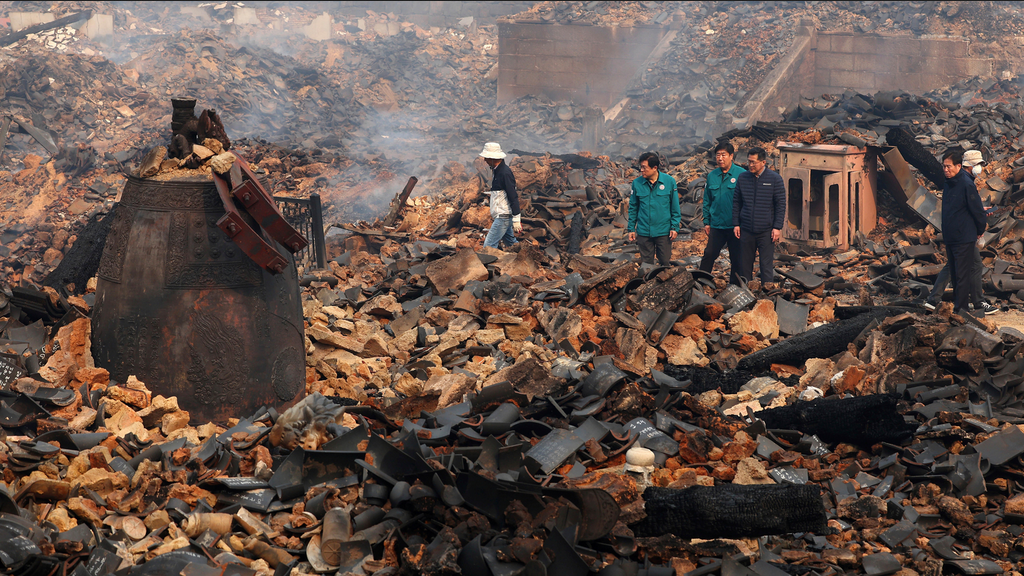
Yeong-nam, 72, walks at her burnt house, where she lived for 52 years, after a wildfire devastated the area in Uiseong,
ANDONG, South Korea, March 27 (Reuters) – Wildfires raging in South Korea doubled in size on Thursday from a day earlier, as authorities called the blazes the country’s worst natural fire disaster with at least 26 people killed and historic temples incinerated.
More than 33,000 hectares (81,500 acres) has been charred or were still burning in the largest of the fires that began in the central Uiseong county, making it the biggest single forest fire in South Korea’s history. The previous record was 24,000 hectares (59,000 acres) in a March 2000 fire.
Sign up here.
“We are nationally in a critical situation with numerous casualties because of the unprecedented rapid spread of forest fires,” Acting President Han Duck-soo told a government response meeting.
The military has released stocks of aviation fuel to help keep firefighting helicopters flying to douse flames across mountainous regions in the southeast of the country where fires have been burning now for nearly a week.
More than 120 helicopters have been deployed in three regions battling the blazes, the safety ministry said. South Korea relies on helicopters to fight forest fires because of its mountainous terrain.
The wildfires that originated in Uiseong have been moving rapidly eastward, spreading almost to the coast, carried by gusty winds and with dry conditions aggravating the situation.
While the meteorological agency has forecast some rain for the southwest, precipitation is expected to be under five millimetres for most of the affected areas.
“The amount of rain is going to be small so it doesn’t look like it’ll be big help in trying to extinguish the fire,” Korea Forest Service Minister Lim Sang-seop told a briefing.
Experts have said the Uiseong fire showed extremely unusual spread in terms of its scale and speed, and that climate change is expected to make wildfires more frequent and deadly globally.
Higher temperatures amplified by human-caused climate change contributed to the existing seasonally dry conditions, “turning dry landscapes into dangerous fire fuel” in the region, the Climate Central group, an independent body made up of scientists and researchers, said in a report.


 admin
admin