
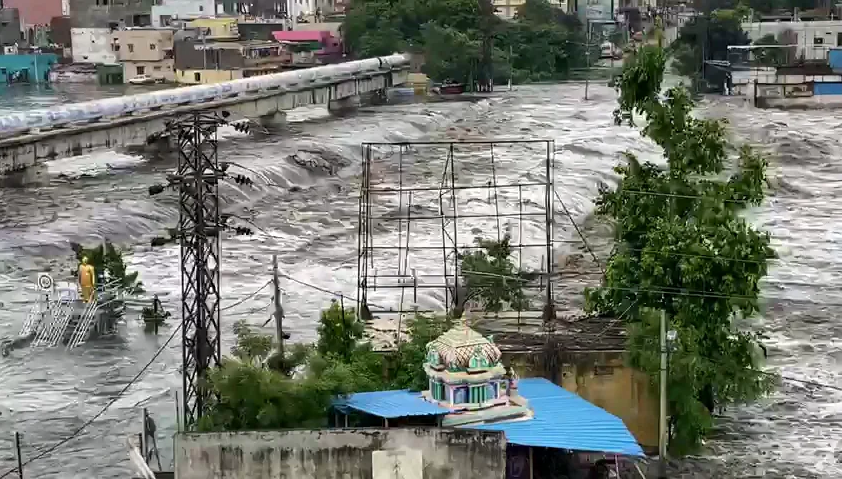
Hyderabad, the bustling capital of Telangana, has been hit by intense rainfall, wreaking havoc on the city’s infrastructure and leaving residents grappling with floodwaters. The continuous downpour has triggered massive flooding, particularly in the low-lying areas near the Musi River, forcing the evacuation of over 1,000 people. The river’s banks have burst, exacerbating the flood situation, leaving roads submerged and causing widespread damage.
Floods Strike Hyderabad: The Musi River Overflows
In an unprecedented turn of events, Hyderabad’s residents have witnessed a stark reminder of the unpredictable nature of monsoon rains. Since the early hours of the morning, heavy rain has lashed the city, causing rivers, streams, and lakes to overflow. Among the worst-hit is the Musi River, which, following a night of relentless downpours, broke its banks, inundating the surrounding areas.
Musi, which flows through the heart of the city, has a history of flooding, but the scale of this year’s disaster has shocked many. With no immediate sign of the rainfall easing, local authorities have issued red alerts for the city, warning that more areas may soon be submerged.
Roads Underwater, Commuters Stranded
As the rain continues, parts of Hyderabad’s key roads have become rivers themselves, making commuting near impossible. From Ameerpet to Malakpet, highways and inner-city roads are inundated, disrupting daily activities and stranding hundreds of commuters. Several vehicles have been caught in the rising waters, with some even being swept away by the powerful currents. Residents are advised to stay home or avoid any non-essential travel.
The Hyderabad Metropolitan Development Authority (HMDA) has issued advisories to businesses and residents living in flood-prone areas to remain cautious. Many local shops have closed down as water levels rise, leading to economic losses in certain parts of the city.
Evacuations Underway: More Than 1,000 People Moved to Safety
As floodwaters continue to rise, rescue teams from the National Disaster Response Force (NDRF) and local authorities have swung into action. More than 1,000 people living in low-lying areas close to the Musi River have been evacuated and moved to temporary shelters. Officials are prioritizing the safety of vulnerable populations, including elderly residents and children.
The Telangana State Disaster Management Authority (TSDMA) is working round the clock to manage the situation and ensure that no lives are lost. Rescue operations are being led by police and fire personnel, with volunteers from local NGOs also assisting in evacuation efforts.
The evacuation centers are equipped with basic amenities, and efforts are being made to provide food, water, and medical care to those displaced by the floods. Community kitchens have been set up in several relief camps, ensuring that those evacuated from the affected areas are well-catered for.
Local Impact: A Reflection of Climate Change?
The severity of the rains and floods in Hyderabad has drawn attention to the broader issue of climate change and its impact on urban planning. Hyderabad, known for its vibrant tech hubs and rapidly growing infrastructure, has faced increasing pressure on its drainage systems. With unchecked urbanization, large swathes of the city have become vulnerable to flash floods like never before.
Environmental experts are highlighting that frequent, heavy rainfall is a direct consequence of climate change, which has led to more erratic weather patterns across the country. Experts urge local governments to invest in more resilient infrastructure to protect cities like Hyderabad from future natural calamities.
Hyderabad has faced flooding in the past, but experts are calling this incident an indication that urban planning must evolve to account for the growing challenges of climate change. Proper flood management systems, alongside green spaces and better stormwater management, are crucial to minimize the impact of such disasters in the future.
Emergency Response and Recovery Plans
In response to the rising water levels, the Hyderabad Municipal Corporation (HMC) has activated its emergency services, deploying pumps to drain the excess water from flooded roads and residential areas. Tanker lorries are being used to provide drinking water to affected communities, as well as to assist in floodwater removal.
As for recovery efforts, authorities have already begun assessing the damage to both private and public properties. With rainfall forecasted to continue for the next few days, recovery is expected to be a long and challenging process. Meanwhile, experts are advising citizens to stay informed by following updates from the Indian Meteorological Department (IMD) and avoid risky areas until floodwaters recede.
The Road to Recovery: Rebuilding in the Wake of Floods
For Hyderabad’s residents, the coming weeks will be marked by the twin challenges of recovery and rebuilding. While the damage is yet to be fully assessed, the city’s resilience is set to be tested once again. As in the past, Hyderabad’s community spirit is expected to play a crucial role in helping residents recover from this disaster.
Local Perspective: Hyderabad’s Will to Overcome
For the people of Hyderabad, this devastating flood has brought the city together in a way that transcends divisions. From local volunteers to government agencies working side by side, the unity displayed during these trying times has been commendable. Local businesses and neighborhoods are rallying together to offer aid to those in need, showcasing the collective resilience of the people who call this city home.
The flood is a stark reminder of the unpredictability of nature and the pressing need for sustainable urban development. While the city recovers, conversations around climate resilience and preparedness will continue to grow louder.
Conclusion: A Call for Future Preparedness
Hyderabad’s flood disaster is a clear signal for authorities and citizens alike to prioritize environmental sustainability and climate change preparedness. With climate-related disasters expected to increase, the city needs robust infrastructure, efficient disaster management systems, and enhanced community resilience to tackle future challenges.
As Hyderabad braces for more rain, the immediate concern remains the safety of its people, and the long-term focus should shift toward ensuring that the city is better prepared for such calamities in the future.