
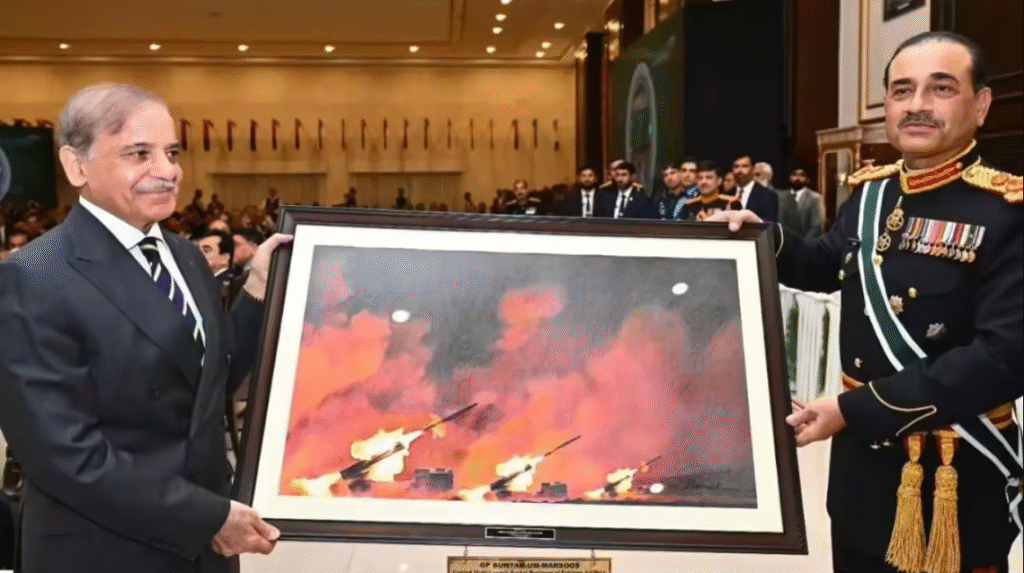
Pakistan’s top leaders highlight the country’s strategic mineral wealth during high-profile U.S. visit, signaling new economic and geopolitical opportunities.
Pakistan’s Rare Earth Minerals Take Center Stage at White House
In a landmark diplomatic event, Prime Minister Shehbaz Sharif and Chief of Army Staff General Asim Munir presented Pakistan’s vast reserves of rare earth minerals during their recent visit to the White House. This high-profile meeting emphasized Pakistan’s untapped potential in the global strategic minerals market, which is crucial for modern technologies and green energy solutions.
What Are Rare Earth Minerals?
Rare earth minerals (REM) are a group of 17 elements vital for manufacturing everything from smartphones and electric vehicles to advanced defense systems. With global demand surging, countries rich in these resources are gaining significant geopolitical influence.
The White House Meeting: A Strategic Showcase
During the discussions with U.S. officials, Pakistan’s delegation highlighted the country’s significant deposits of rare earth minerals, positioning Pakistan as a potential key supplier in a market currently dominated by a few global players.
Prime Minister Shehbaz Sharif stressed the economic benefits:
“Our mineral wealth offers Pakistan a pathway to economic growth, industrial development, and stronger ties with global partners, especially the United States.”
General Asim Munir underscored the strategic importance, linking mineral resources to national security and technological advancement.
Localized Perspective: What This Means for Pakistan’s Economy and Regions
Pakistan’s mineral-rich areas—particularly Balochistan, Khyber Pakhtunkhwa, and Gilgit-Baltistan—stand to benefit enormously from increased investment and exploration spurred by this newfound global attention.
-
Balochistan: Known for its vast reserves of rare earth elements, this region could see infrastructure development and job creation as mining projects expand.
-
Khyber Pakhtunkhwa: Emerging exploration activities here could diversify the local economy beyond agriculture and forestry.
-
Gilgit-Baltistan: With mineral wealth underexplored, increased focus could bring new opportunities to this mountainous region, supporting sustainable development.
Local communities have expressed cautious optimism, hoping that mining efforts will balance economic growth with environmental protections.
Why This Matters Globally: Pakistan’s Role in the Rare Earth Minerals Market
With growing global competition for rare earth elements—especially given geopolitical tensions around supplies from China—Pakistan’s entry into the market could reshape global supply chains. This aligns with U.S. interests in diversifying sources of critical minerals vital for defense and clean energy technologies.
Experts suggest that Pakistan’s mineral diplomacy at the White House signals a new chapter in economic cooperation and strategic partnership between the two countries.
Quick Facts: Pakistan’s Rare Earth Minerals and Global Demand
| Aspect | Details |
|---|---|
| Key Minerals | Neodymium, Lanthanum, Cerium, and others |
| Major Deposits | Balochistan, Khyber Pakhtunkhwa, Gilgit-Baltistan |
| Global Market Value | Projected to exceed $20 billion by 2030 |
| U.S. Interest | Diversifying rare earth mineral supply chains |
| Pakistan’s Strategic Goal | Economic growth, security, and global partnerships |
What’s Next for Pakistan?
Pakistan aims to attract foreign investment and technology to develop its rare earth mineral sector responsibly. The government is also expected to introduce policies to ensure environmental sustainability and community welfare in mining regions.
Continued dialogue with the U.S. and other international partners could open new avenues for trade, technology transfer, and geopolitical influence.
Conclusion: A Mineral-Rich Future Beckons for Pakistan
The White House spotlight on Pakistan’s rare earth minerals marks a significant milestone. With the combined leadership of PM Shehbaz Sharif and General Asim Munir, Pakistan is poised to leverage its mineral wealth as a driver of economic growth and regional stability.