Shaun
Shaun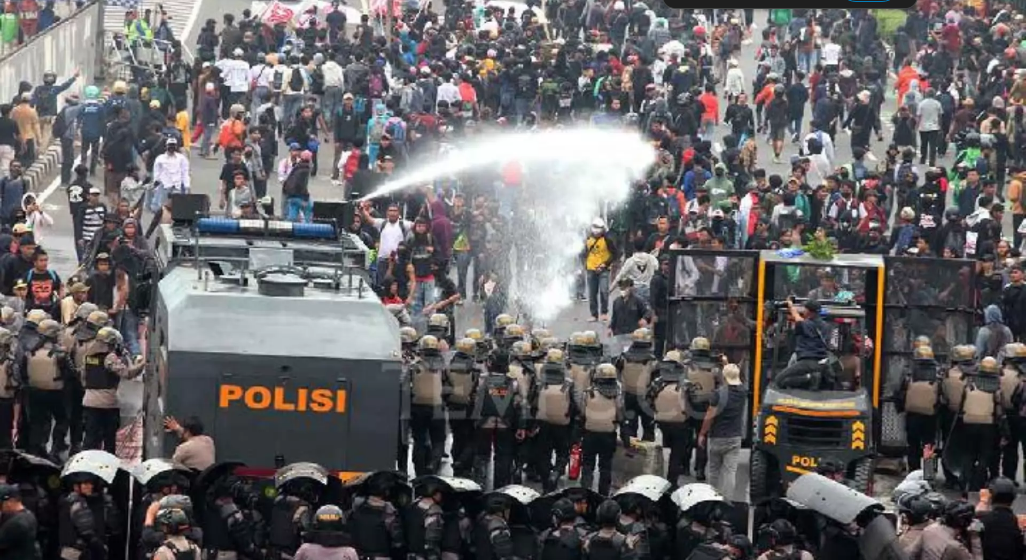
Indonesia’s worst wave of violent protests in years seems to have come to a pause for now after the government ordered the military and police to take stern action against rioters and looters.
Some students and civil society groups called off their protest on Monday, citing fears of heightened security measures imposed after deadly riots across the country on the weekend, Reuters reported. But hundreds still gathered in universities in Bandung, West Java despite threats of police raids, according to local media reports.
At least eight people have been killed in the protests, which began peacefully over controversial housing perks for lawmakers but erupted on Thursday when an armored police vehicle hit and killed a rideshare driver, Reuters reported.
The unrest escalated over the weekend as thousands of protesters across the sprawling archipelago set fire to legislative buildings and looted parliamentarians’ homes. The Indonesia National Police arrested 3,195 people across the country, including 1,240 people in the capital Jakarta, government-run.
Economic and political frustration has been brewing for months under the leadership of Indonesian President Prabowo Subianto, who took office last October and was forced to cancel a planned trip to China this week to deal with the turmoil.
Why are Indonesians angry?
Rallies began last Monday outside the House of Representatives in Jakarta as protesters, mainly made up of students and labor union members, objected to a monthly housing allowance of 50 million rupiah ($3,000) for lawmakers – more than 10 times the national average monthly minimum wage.
How did the protests turn deadly?
On Thursday (August 28) evening, an armored police vehicle hit and killed rideshare motorbike driver Affan Kurniawan during a clash between police and protesters in Jakarta.
Short-video app TikTok said on Saturday it had suspended its live feature in Indonesia for a few days to “keep TikTok a safe and civil space.”
Tense scenes broke out on Sunday when the military was deployed to guard the presidential palace, while looters broke into a house owned by Finance Minister Sri Mulyani Indrawati outside the capital Jakarta.
Government backtracks
Speaking at a press conference at the presidential palace and flanked by the leaders of various political parties on Sunday, Prabowo announced that Indonesia’s political parties had reached a consensus to reduce lawmakers’ benefits.
Amnesty International said that attaching those labels to protesters ignored the underlying reasons for the protest.
“Labeling public demonstrations with accusations of treason or terrorism is excessive, especially when it’s constantly presented with the narrative of ‘foreign interference’ and ‘stirring up conflict’ when people are demonstrating to voice their concerns about problematic government policies,” said Usman Hamid, executive director of Amnesty International Indonesia.
“The president’s statement is insensitive to all the grievances and aspirations the public has voiced during the demonstrations.”
Cho Yong Gi, a 22-year-old university student, said despite the warnings from Prabowo, people will continue to express criticism of the government on social media.
A year of protests against Prabowo
Prabowo, a former army general with a controversial past, took over as president of the world’s third-largest democracy last October with promises to tackle corruption and boost national self-reliance.
But many of his flagship policies have been controversial, and the latest protests represent the most significant challenge yet to his leadership.
Prabowo’s free school lunch program has also been marred by mass food poisoning cases across the archipelago, with 1,000 people falling ill since its launch in January. People were already angry about cuts to road maintenance and other budget reallocations to fund the program.
Proposals to raise land and property taxes have also fueled anger, including protests in the town of Pati against a proposal for a 250% property tax hike in Central Java, which was later withdrawn.
Human Rights Watch researcher Andreas Harsono told CNN that Prabowo remains popular amongst his most fervent supporters and backers from the military and business elites.
“It is less than a year, but we have seen at least three major protests since October last year when Prabowo took office,” he said, referring to the recent protests, and other major demonstrations during Labor Day on May 1 and Independence Day on August 17.
Whether these protests reignite with renewed vigor to throw Prabowo out of office will depend on how the government responds to economic grievances, Harsono said.
“The public anger has stemmed from a very long term economic questions and this week’s events are just a catalyst,” she said. “We’re not going to be surprised if another protest happens again.”


 admin
admin