Shaun
Shaun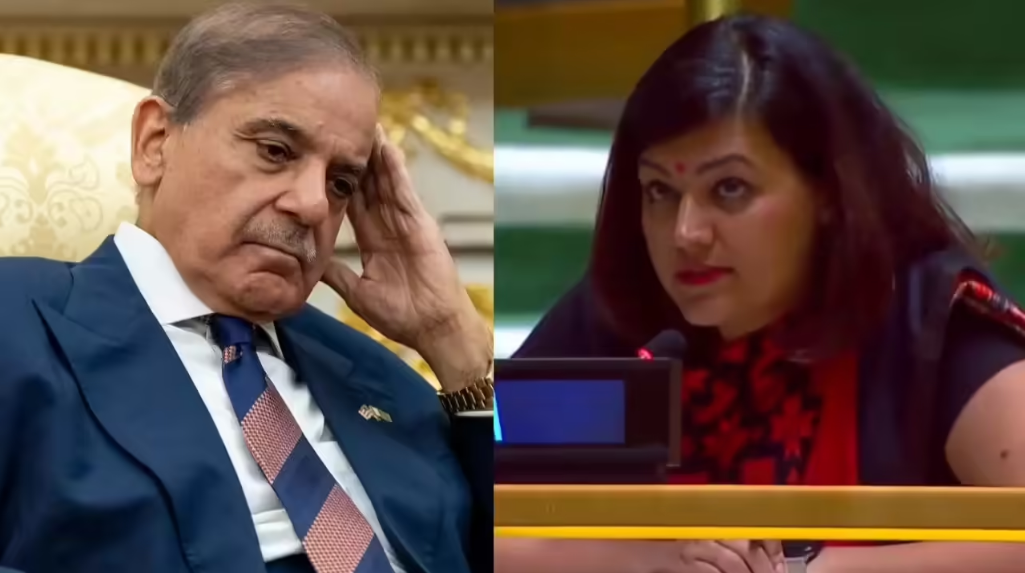
In a high-stakes moment at the United Nations General Assembly (UNGA), Indian diplomat Petal Gahlot made headlines with a blistering speech that took direct aim at Pakistan’s Prime Minister, Shehbaz Sharif. Known for her eloquence and sharp diplomacy, Gahlot did not hold back as she took on Pakistan’s leader, challenging his comments and actions regarding India’s sovereignty and national security.
A Powerful Response at the UNGA
During the UNGA debate on September 27, 2025, Petal Gahlot, India’s Permanent Representative to the UN, stood at the podium with unwavering conviction. As Pakistan’s Prime Minister took to the stage, Gahlot’s response was swift, sharp, and laden with diplomatic precision.
She slammed Sharif for his baseless accusations against India, which she described as part of a larger narrative of Pakistan’s “continuous destabilizing rhetoric.” Gahlot emphasized that India’s commitment to peace, security, and human rights is unwavering, countering Sharif’s speech, which many felt had resorted to provocative rhetoric that ignored the realities of the region.
Key Points of the Speech: Gahlot’s Diplomatic Masterstroke
Petal Gahlot’s speech was not just a retort; it was a strategic diplomatic move that reinforced India’s position on several key issues, with a focus on Pakistan’s long-standing cross-border terrorism and its role in regional instability. Key points from her address included:
-
Addressing Terrorism: Gahlot highlighted India’s ongoing fight against terrorism, pointing to Pakistan’s support for terrorist organizations that threaten the security and sovereignty of neighboring nations. She made it clear that Pakistan’s support for terror outfits undermines regional stability and peace.
-
The Kashmir Issue: While responding to Pakistan’s narrative on Kashmir, Gahlot asserted that Kashmir is an integral part of India and dismissed Pakistan’s longstanding claims as illegitimate. She described Pakistan’s rhetoric on Kashmir as “outdated and counterproductive,” calling for a move towards cooperation rather than hostility.
-
Human Rights Advocacy: A key moment in her speech was when Gahlot passionately spoke about India’s commitment to human rights, contrasting it with Pakistan’s own record. She pointed to Pakistan’s domestic human rights violations, particularly in Baluchistan and Sindh, calling for a full accountability process rather than hollow accusations aimed at India.
-
A Call for Regional Cooperation: Gahlot ended her address by advocating for peaceful coexistence and cooperation in South Asia, urging Pakistan to engage in constructive dialogue. She stressed that the future of the region lies in mutual respect and collaboration rather than continued confrontations.
Localized Perspective: India’s Strength on the Global Stage
From a domestic viewpoint, Petal Gahlot’s speech was a proud moment for India. With national security and sovereignty at the forefront of India’s foreign policy, her fiery response to Pakistan’s rhetoric resonated with the Indian public. The Indian media quickly lauded Gahlot for her firm and articulate defense of India’s position, with many commentators noting that this was a clear message to Pakistan: India will not be bullied or swayed in matters of its territorial integrity.
In India’s larger strategic context, the speech came at a time when China and Pakistan are increasingly seen as close allies, with Beijing’s growing influence over Islamabad being a source of concern for India. The speech also served as a counterpoint to China’s growing assertiveness in the region, reinforcing India’s standing in the international arena as a key player in South Asian geopolitics.
For ordinary Indians, this UNGA showdown became a symbol of national pride. In a country with deep emotional ties to its sovereignty, Gahlot’s speech was not just diplomatic, but also symbolic of India’s growing influence on the world stage. From students to political analysts, her strategic defense of India’s interests was widely celebrated.
The Broader Impact: A Diplomatic Turning Point
This exchange at the UNGA is more than just a verbal confrontation between two nations. It highlights a broader trend in international diplomacy, where countries like India are increasingly challenging misleading narratives and standing firm in defense of their national interests.
India, which has grown both economically and diplomatically over the past two decades, is asserting its place as a global leader, refusing to accept what it sees as the misrepresentation of its actions and intentions on the world stage. Gahlot’s speech is also a reminder that India is now more than capable of holding its own against regional adversaries at global forums like the UNGA.


 admin
admin