
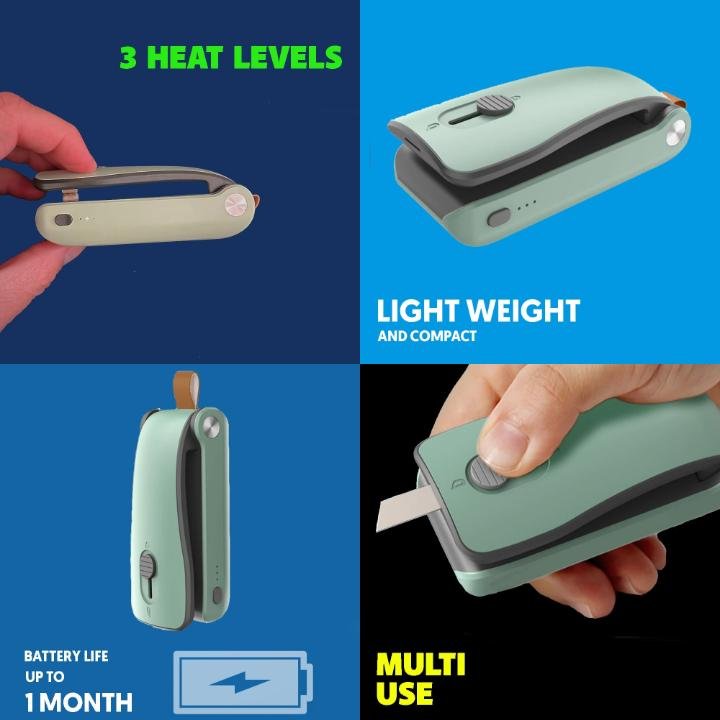
St. Petersburg, FL, Feb. 4, 2026 (WEB PRESS GLOBAL) — In an era where household budgets are being stretched by inflation and global supply chain fluctuations, the “Easy Sealer” has emerged as a critical tool for the modern kitchen. Recent data indicates that the average American household loses nearly $3,000 annually due to food waste, much of which stems from improperly stored snacks, pantry staples, and bulk-purchased goods. As consumers pivot toward sustainable living and cost-efficiency, the Easy Sealer—a USB-C rechargeable handheld bag sealer—is redefining how we preserve freshness at home.
The Science of Freshness: Why Traditional Methods Fail
For decades, the “chip clip” has been the standard solution for open bags. However, clips, rubber bands, and clothespins share a fatal flaw: they do not create an airtight seal. Oxygen and moisture are the primary enemies of food preservation. Oxygen leads to oxidation, which turns fats in snacks rancid, while moisture turns crisp textures into a soggy, unappealing mess.
The Easy Sealer solves this by utilising thermal fusion technology. By applying controlled heat to thermoplastic packaging, it creates a permanent, airtight bond that mimics the original factory seal. This process effectively locks out the environment, extending the shelf life of food by up to five times compared to traditional storage methods.
Easy Sealer Review: A Deep Dive into Key Features
1. USB-C Rechargeable Power
Unlike older generations of handheld sealers that relied on disposable AA batteries—which often lacked the power to maintain consistent heat—the Easy Sealer is equipped with a high-capacity internal lithium battery.
-
Universal Charging: The move to USB-C means you can charge your sealer with the same cable used for your smartphone or laptop.
-
Rapid Charge: A full charge is achieved in under 90 minutes.
-
Longevity: Depending on frequency of use, a single charge can last up to one month, making it a reliable companion for daily kitchen tasks.
2. Triple-Heat Precision Settings
One of the standout features of the Easy Sealer is its adjustable temperature control. Different packaging materials require different thermal intensities:
-
Level 1 (Low): Ideal for thin, transparent film bags (like produce bags or bread packaging).
-
Level 2 (Medium): The “sweet spot” for standard snack bags, potato chips, and cereal liners.
-
Level 3 (High): Designed for heavy-duty, multi-layer, or aluminium-lined bags, such as those used for pet food and gourmet coffee.
3. The 2-in-1 Seal and Cut Function
The Easy Sealer isn’t just about closing bags; it’s about optimising storage. The integrated cutting blade allows users to trim away excess bag material. As a bag of chips or cereal is consumed, the “dead space” at the top of the bag can be removed, allowing for a more organised and space-efficient pantry.
Economic Impact: Fighting the $2,913 Food Waste Challenge
According to the Environmental Protection Agency (EPA), food waste is one of the largest components of municipal landfills. For a family of four, reducing food waste isn’t just an environmental choice—it’s a financial one. By sealing bulk purchases (such as large bags of rice, flour, or frozen vegetables), the Easy Sealer allows families to capitalise on warehouse club prices without the risk of spoilage.
| Food Item | Standard Storage Life | Easy Sealer Storage Life |
| Potato Chips | 2-3 Days | 2-3 Weeks |
| Cereal | 1 Week | 1 Month+ |
| Frozen Veggies | 1 Month (with ice crystals) | 4-6 Months (no freezer burn) |
| Pet Food | 2 Weeks (loss of aroma) | 2 Months+ |
Practical Applications: Beyond the Kitchen
While the Easy Sealer is a kitchen powerhouse, its portability (thanks to its magnetic base that sticks to refrigerators) makes it useful in various scenarios:
-
Camping and Hiking: Seal waterproof bags for matches, electronics, or pre-portioned trail mix.
-
Organisation: Seal small craft supplies, beads, or hardware in plastic pouches to prevent loss.
-
Travel: Seal toiletries to prevent leaks in your luggage.
How to Use Your Easy Sealer for Maximum Results
-
Preparation: Ensure the sealing area of the bag is free of crumbs, oil, or moisture.
-
Select Heat: Choose the setting based on bag thickness.
-
The Glide: Press down and slide the sealer across the bag at a steady, moderate pace (about 2-3 seconds for a standard bag).
-
Cooling: Allow the seal to set for 5 seconds before moving the bag.
Comparison: Easy Sealer vs. Vacuum Sealers
Many consumers wonder if they should invest in a large vacuum sealer or a handheld device.
-
Space: Vacuum sealers are bulky and occupy counter space; the Easy Sealer fits in a drawer or on the fridge door.
-
Cost: Vacuum sealers require proprietary bags that can cost up to $1.00 each. The Easy Sealer works with the bags your food already comes in.
-
Speed: For a quick snack, the Easy Sealer takes seconds, whereas a vacuum sealer involves a multi-step setup.
Conclusion
The Easy Sealer represents the intersection of convenience and conservation. In a world moving toward Type-C universality and zero-waste lifestyles, this handheld device is no longer a luxury—it is a pantry essential. By locking in freshness and locking out waste, it pays for itself within the first few months of use.
DISCLAIMER: This article is for informational purposes only. Web Press Global (https://www.webpressglobal.com/) provides this content as a review and analysis of current market trends and product features. We do not manufacture the Easy Sealer, nor are we responsible for the performance or warranty claims of the product. Always follow the manufacturer’s safety guidelines when operating heat-sealing devices. Product prices and specifications mentioned are based on data available as of February 2026 and are subject to change.