Shaun
Shaun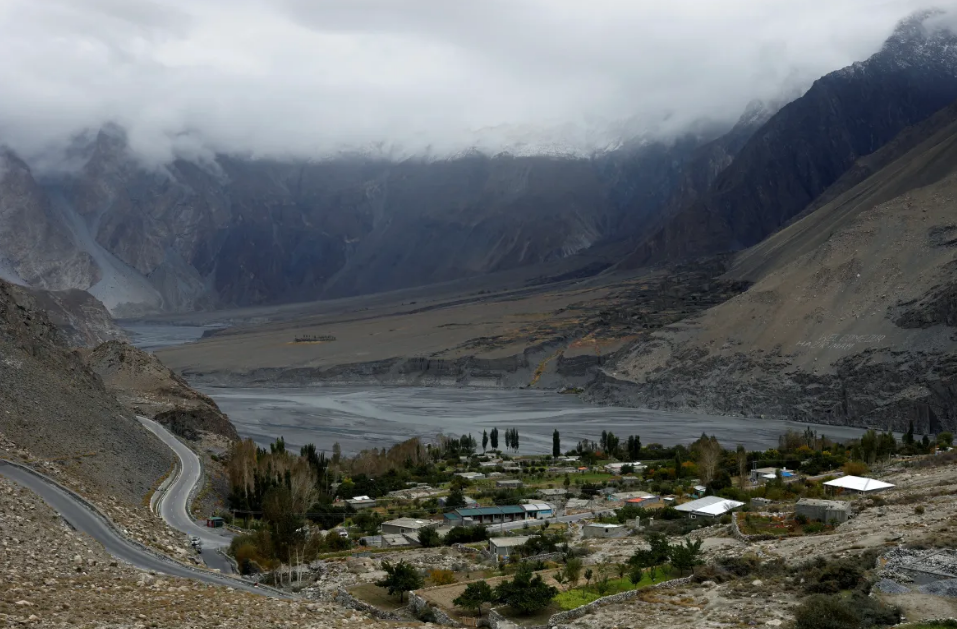
Mehdi, his wife and their two children had to flee their home in late July after glacial melting led to a lake outburst. “We knew what was coming because of how loud the clanking of the rocks was, and the water stream stopped,” he said. “We had just enough time to make it to a higher elevation and save ourselves, but all our life savings, home, livestock, it’s all gone, wiped out in a few moments.”
Mehdi and his family walked nearly 100km (60 miles) to the next village and from there hitched a car ride to get to Skardu, the largest city in the area. Theirs is one of many similar stories to have emerged in recent weeks from Gilgit-Baltistan, a part of Pakistan-administered Kashmir where floods have submerged entire villages, especially in Ghizer district.
Pakistan is facing a multitude of climate emergencies – its forests are shrinking, glaciers are melting faster than anticipated, and now catastrophic rains are devastating communities. Rampant deforestation has eroded natural buffers, while warming mountain temperatures weaken glaciers, destabilising landscapes and exposing people to landslides and floods.
These intersecting threats have collided this year as the monsoon rains and rare cloudbursts have slammed northern regions like Khyber Pakhtunkhwa and Pakistan-administered Kashmir. The water has then pushed downstream, creating havoc in other parts of Pakistan too – the damage amplified by the construction of residential societies near river banks and over flood plains in recent decades. In this year’s monsoon, since June 26, at least 804 people have died, a majority of them in Khyber Pakhtunkhwa.
What’s happening to Pakistan’s glaciers?
A study by EvK2CNR, an Italian nonprofit that focuses on scientific research in high-mountain environments, in 2024 revealed that Pakistan is home to 13,032 glaciers, which cover 13,546.93 square kilometres (5,230 square miles) across the basins of the Gilgit, Indus, Jhelum, Kabul and Tarim rivers.
Pakistan has the largest volume of glacial ice for any country outside polar regions. Uniquely, the meeting point of three major mountain ranges, the Hindu Kush, the Himayalas and the Karokaram lies in Pakistan-administered Kashmir. Glacial ice is also a major source of water for Pakistan’s 220 million people.
The International Centre for Integrated Mountain Development (ICIMOD), a consortium of regional countries that the Hindu Kush and Himalaya mountain ranges span, conducted a study that indicates that the Hindu Kush and Himalayan glaciers disappeared 65 percent faster in the 2011-2020 period than in the previous decade.
According to Zakir Hussain Zakir, the director of planning and development at University of Baltistan, the rate of melting is 10-30 metres (33-100ft) per year in the Himalayas, 5-10 metres (16-33ft) in the Hindu Kush, and 2-3 metres (7-10ft) in the Karokaram. Glacial ice is melting faster than new snow can replenish, as summers get longer.


 admin
admin