Shaun
Shaun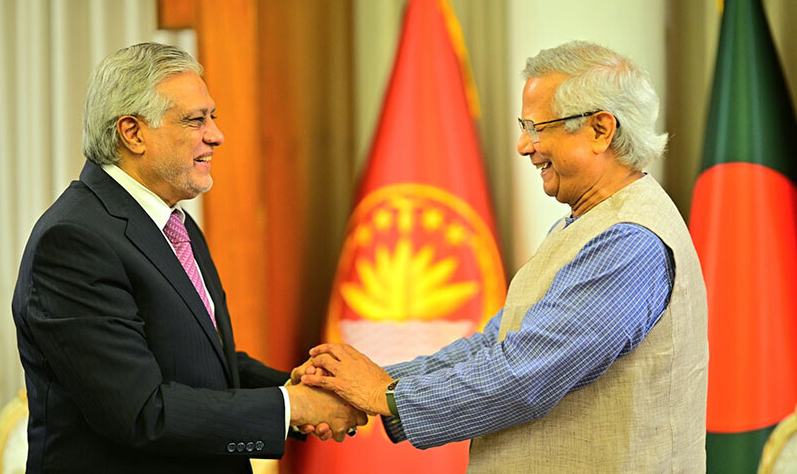
During his meeting with Pakistan’s Foreign Minister Ishaq Dar on Sunday, Yunus once again stressed the need to strengthen not only bilateral ties but also regional cooperation with Islamabad. At the heart of his push for stronger regional engagement is Yunus’s renewed drive to get Saarc up and running.
The organisation, which includes Afghanistan, Bangladesh, Bhutan, India, the Maldives, Nepal, Pakistan, and Sri Lanka, has not held a summit since the 2014 gathering in Kathmandu.
During his recent meeting with Ishaq Dar, Yunus reiterated the importance of fully exploring avenues for cooperation within the region.
The inactivity of Saarc stems from heightened regional tensions, particularly after the 2016 Uri attack which led India and other countries, including Bangladesh, to boycott the summit scheduled to be held in Islamabad that year.
However, Pakistan’s actions, such as vetoing trade protocols and the Saarc Motor Vehicles Agreement — a key framework for cross-border vehicular movement in the region — proved to be major roadblocks when the grouping was functional.
While diplomatic manoeuvres like the Yunus-Dar meeting continue, the revival of Saarc remains uncertain. Pakistan’s historical blockade of key initiatives has underscored the grouping’s persistent challenges. Its repeated vetoes have weakened Saarc’s effectiveness, pushing other member nations to pursue progress through alternative regional frameworks.


 admin
admin