

GLP-1 medications have changed the way doctors approach weight loss and type 2 diabetes. Drugs like semaglutide and liraglutide are now household names, and many people credit them with meaningful, long-term weight reduction.
But injections aren’t for everyone.
That’s why interest in GLP-1 patches has exploded. People want to know if a patch could deliver the same benefits without needles, weekly shots, or complicated routines.
So what exactly are GLP-1 patches? Do they work? Are they safe? And are they actually available yet?
This article covers everything you need to know, using the latest medical understanding, patient concerns, and search-driven questions.
What Is GLP-1?
GLP-1 stands for glucagon-like peptide-1, a hormone your body naturally produces in the gut. It plays a key role in regulating blood sugar, appetite, and digestion.
When GLP-1 is released after you eat, it helps by:
-
Stimulating insulin release
-
Reducing glucagon (which raises blood sugar)
-
Slowing stomach emptying
-
Sending fullness signals to the brain
This combination makes you feel satisfied sooner and longer, which naturally reduces calorie intake.
GLP-1 medications are synthetic versions or enhancers of this hormone, designed to amplify these effects.
How GLP-1 Medications Are Currently Delivered
Right now, GLP-1 receptor agonists are available in two main forms:
-
Injectable medications
These include weekly or daily injections prescribed for diabetes and weight management. -
Oral tablets
A limited number of GLP-1 drugs are available in pill form, though absorption is more complex and less efficient.
Both forms work, but they come with downsides like injections, gastrointestinal side effects, or strict dosing rules.
This is where the idea of a GLP-1 patch becomes appealing.
What Are GLP-1 Patches?

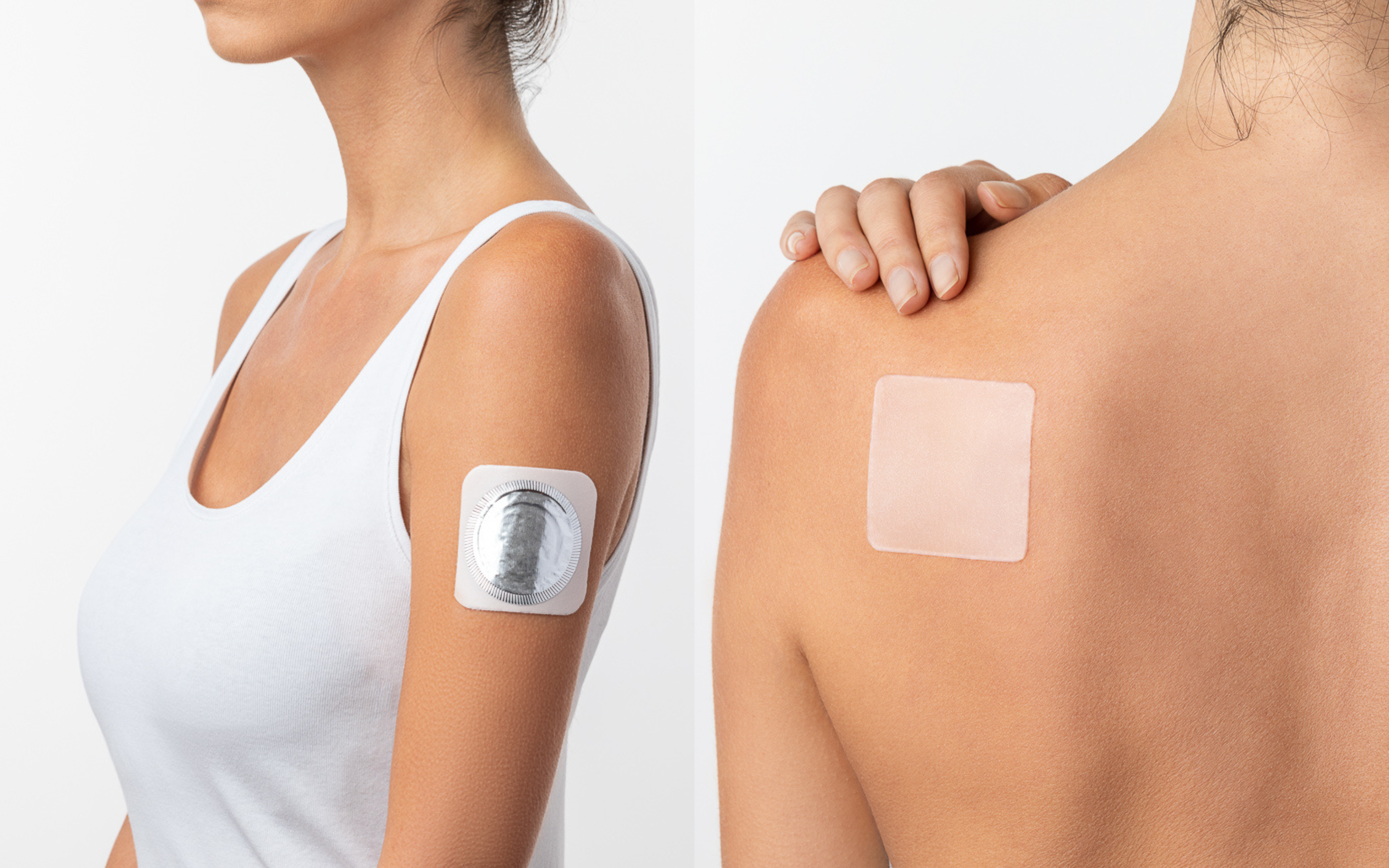


A GLP-1 patch is a transdermal delivery system designed to release GLP-1 medication through the skin and into the bloodstream over time.
In theory, the patch would:
-
Stick to the skin like a nicotine or hormone patch
-
Deliver a steady dose of medication
-
Avoid injections entirely
-
Reduce peaks and crashes in drug levels
At the moment, true FDA-approved GLP-1 patches do not yet exist. However, several pharmaceutical companies and research teams are actively working on this technology.
How Would a GLP-1 Patch Work?
Delivering GLP-1 through the skin is scientifically challenging.
GLP-1 molecules are:
-
Large
-
Fragile
-
Easily broken down
Skin is designed to keep things out, not let them in.
Researchers are exploring advanced technologies such as:
-
Microneedle patches
-
Chemical permeation enhancers
-
Nanoparticle carriers
-
Controlled-release polymer layers
Some experimental patches use tiny dissolvable microneedles that painlessly penetrate the outer skin layer, releasing medication without a traditional injection.
Are GLP-1 Patches Available Right Now?
This is a critical point for accuracy.
Short answer:
No FDA-approved GLP-1 patch is currently available for prescription use.
What is available?
-
Compounded topical products claiming GLP-1 effects
-
Supplements marketed as “GLP-1 patches”
-
Research-only clinical prototypes
These products are not the same as proven GLP-1 medications.
Medical organizations strongly advise caution with any over-the-counter or online patch claiming to replicate prescription GLP-1 drugs.
GLP-1 Patches vs GLP-1 Injections
| Feature | GLP-1 Patches | GLP-1 Injections |
|---|---|---|
| FDA approval | No (yet) | Yes |
| Needle-free | Yes | No |
| Dosing accuracy | Uncertain | High |
| Clinical evidence | Limited | Extensive |
| Availability | Experimental | Widely prescribed |
| Cost coverage | Not covered | Often covered |
While patches sound appealing, injections remain the only clinically proven option today.
Potential Benefits of GLP-1 Patches
If successfully developed and approved, GLP-1 patches could offer meaningful advantages.
1. Improved Adherence
Many patients stop treatment because they dislike injections. A patch could improve long-term consistency.
2. Steadier Drug Levels
Slow, continuous delivery may reduce nausea and digestive side effects.
3. Convenience
No refrigeration, no needles, no weekly reminders.
4. Expanded Access
People with needle anxiety or physical limitations could benefit.
Potential Risks and Limitations
GLP-1 patches also come with unanswered questions.
Absorption Issues
Skin thickness, hydration, and temperature affect drug delivery.
Dose Control
Precise dosing is harder to guarantee with transdermal systems.
Skin Reactions
Rashes, irritation, or allergic responses are possible.
False Marketing
Unregulated products may claim benefits they cannot deliver.
Are GLP-1 Patches Safe?
Safety depends entirely on formulation and regulation.
-
FDA-approved GLP-1 injections undergo extensive trials
-
Patch products sold online often bypass these safeguards
-
“Natural” or “herbal” GLP-1 patches do not contain real GLP-1 medication
Until regulated patches exist, safety cannot be assumed.
GLP-1 Patches and Weight Loss: What Does the Science Say?
Currently, no large-scale human trials prove that GLP-1 patches produce the same weight loss results as injections.
Animal studies and early prototypes show promise, but medical science requires:
-
Controlled trials
-
Peer-reviewed data
-
Long-term outcome tracking
Any claim of “same results as Ozempic in a patch” should be viewed skeptically.
GLP-1 Patches and Type 2 Diabetes
The same limitations apply for diabetes treatment.
Precise glucose control requires consistent, predictable dosing. Until patches can meet that standard, injections remain the gold standard.
Why Healthcare Providers Are Cautious
Doctors prioritize:
-
Evidence
-
Safety
-
Predictable outcomes
Recommending unapproved GLP-1 patches could expose patients to:
-
Ineffective treatment
-
Delayed care
-
Financial loss
-
Health risks
This is why most providers advise waiting for FDA-reviewed options.
What to Watch for in the Future
GLP-1 patch development is moving fast.
Watch for:
-
Clinical trial announcements
-
FDA investigational drug approvals
-
Pharmaceutical company pipelines
-
Peer-reviewed publications
Major pharmaceutical companies are actively exploring transdermal GLP-1 delivery, which suggests future availability is possible.
How to Protect Yourself as a Consumer
Before considering any GLP-1 patch:
-
Verify FDA approval status
-
Avoid vague ingredient lists
-
Be skeptical of dramatic claims
-
Talk to a licensed healthcare provider
-
Avoid products sold only through social media ads
Frequently Asked Questions
Are GLP-1 patches FDA approved?
No. As of now, there are no FDA-approved GLP-1 patches.
Do GLP-1 patches work for weight loss?
There is no strong clinical evidence yet proving they work like injections.
Are GLP-1 patches safer than injections?
Safety cannot be confirmed without regulation and trials.
Can I buy a GLP-1 patch online?
Many products are sold online, but they are not FDA approved and may not contain real GLP-1 medication.
Will GLP-1 patches replace injections?
Possibly in the future, but not in the near term.
Final Thoughts
GLP-1 patches represent an exciting idea in weight loss and metabolic care. The promise of needle-free, convenient treatment is real, and research is ongoing.
But today, GLP-1 injections remain the only proven, regulated, and effective option.
If and when GLP-1 patches receive FDA approval, they could reshape obesity and diabetes treatment. Until then, caution, evidence-based care, and professional guidance matter more than hype.