Shaun
Shaun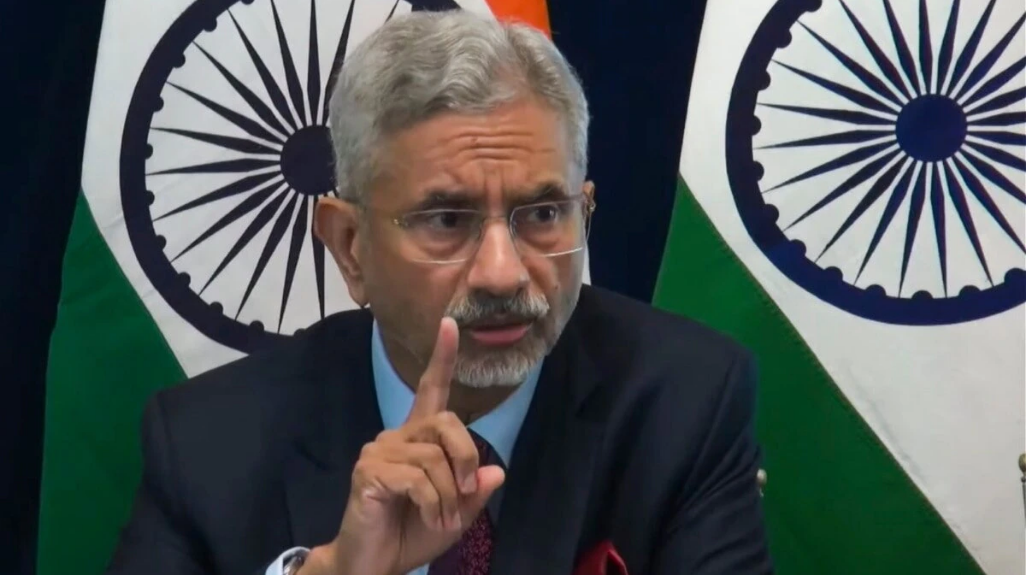
New York: In a statement that appeared directed at US President Donald Trump, External Affairs Minister S Jaishankar on Thursday highlighted the global need for a “global workforce”, emphasising that many countries cannot meet their labour demands from domestic populations alone. Speaking at the event ‘At the Heart of Development: Aid, Trade, and Technology’ hosted by the Observer Research Foundation (ORF) on the sidelines of the UN General Assembly, he stressed that no nation can escape this reality. “Where that global workforce is to be housed and located may be a matter of political debate. But there’s no getting away. If you look at demand and you look at demographics, demands cannot be met in many countries purely out of national demographics,” he added.
Immigration and trade challenges
Jaishankar’s remarks came against the backdrop of global trade tensions, tariff challenges and US President Donald Trump’s hardline approach on immigration, including a new USD 100,000 fee on H-1B visas that directly impacts Indian professionals. Jaishankar said this reality demands international cooperation on workforce distribution.
Trade finds a way despite barriers
Highlighting global trade flows, Jaishankar observed that despite uncertainties, trade always manages to find a way. “It is easier to trade today for physical and digital reasons, as there are better roads, shipping and much smoother trade interfaces than ever in human existence,” he said. He added that while obstacles will continue to arise, they can be countered or mitigated by advancements in technology and connectivity.
Technology, connectivity and self-reliance
According to the minister, the world is headed towards a transformation in technology, trade, connectivity and workplaces in the near future. In such a turbulent atmosphere, he said it is crucial for large countries to build capacities and become more self-reliant. He added that this focus is central to India’s growth strategy. Jaishankar also emphasised that multi-polarity must be built rather than assumed. Citing India’s Digital Public Infrastructure (DPI), he said, “There are many other societies who find the Indian model of DPI frankly far more absorbable, relevant, transposable than a European model or an American model of how to run a more digital life.”
Unpredictability in global affairs
He noted that unpredictability and volatility have sharply increased in recent years, with policy changes now playing out in the global spotlight. “Times are different. A few months make a difference. A few weeks make a difference,” he said. Over the last few years, global focus has shifted from supply chain security to concerns over market access. “So you worry about over-dependence on markets just as you worry about over-dependence on supplies or over-dependence on connectivity,” Jaishankar said. He underlined that diplomacy today is about de-risking, hedging and building resilience against unforeseen shocks. “Today, the central proposition in diplomacy is probably how do you de-risk, how do you hedge, how do you become more resilient, how do you safeguard yourself against unforeseen contingencies,” he added.


 admin
admin